Slow Living Lifestyle: Do You Have to Give Up Your Phone?
What Is Slow Living? And Do You Have to Give Up Your Phone to Do It?
The slow living lifestyle has become incredibly popular over the last few years.
When I first started seeing people talk about it, I had a very specific picture in my head.
Someone wakes up naturally with the sunrise.
They make a cup of tea using herbs they probably grew themselves.
Their phone is nowhere to be seen.
They spend the afternoon baking bread, reading a book, and casually walking through a field of wildflowers.
So, naturally, I assumed slow living wasn’t for me.
I love the idea of a slower life. I really do. It’s one of the things that draws me to cottagecore in the first place.
But I also create content online.
Honestly, I spend A LOT of time on the internet.
My brain is constantly bouncing between ideas, things I need to do, and completely random thoughts that apparently need my immediate attention.
Giving up technology and disappearing into the woods sounds peaceful in theory.
In reality, I would probably make it three hours before wondering of ayone had messaged me.
So then, what actually is slow living?
And more importantly, can you practice slow living without throwing your phone into a lake?
Good news!
You can keep your phone!
What Is Slow Living?
Slow living is basically the idea of being more intentional about how you spend your time.
That’s it.
Pretty simple, huh?
I know the internet sometimes makes it look like you need to move to the countryside and start making your own cheese, but the actual idea behind it is much simpler.
Slow living is about paying attention to your life instead of constantly rushing through it.
It’s choosing to be present in the moment.
It’s allowing yourself to enjoy things without immediately thinking about what comes next.
It’s questioning whether everything really needs to happen as quickly as possible.
And honestly?
I think that’s part of why so many people are drawn to cottagecore.
The cottagecore lifestyle romanticizes a slower way of living. Baking, gardening, reading, crafting, and spending time outside. These are all things that usually require you to stop and actually experience what you’re doing.
You can’t rush a garden.
I mean, you could yell at the plants, but I don’t think that helps.
Slow living takes that same feeling of not being rushed and asks how we can bring that into our everyday lives.
Even if our everyday lives are a little chaotic.
The Slow Living Lifestyle Doesn’t Mean Doing Everything Slowly
This was something I misunderstood at first.
I thought slow living meant literally slowing everything down.
Like I was supposed to peacefully wander through my day while soft instrumental music played somewhere in the background.
Unfortunately, life has never once asked me what background music I would prefer.
Some things need to happen quickly. That’s just how life is sometimes.
You have work.
You have appointments.
You have deadlines.
You might have kids asking you questions while you’re trying to remember why you walked into the kitchen.
Slow living doesn’t mean pretending those things don’t exist (but let’s be real, it would be nice if things like deadlines didn’t exist).
It means deciding that your entire life doesn’t have to feel rushed just because parts of it are busy.
You can have a chaotic morning and still enjoy your coffee.
You can have a long day and still turn on a lamp, grab a fuzzy blanket, and play a relaxing game or read a book for a while.
You can spend hours working online and still stop to listen when a thunderstorm rolls through.
Slow living is less about the speed of your life and more about whether you’re actually present for any of it.
No, You Don’t Have to Give Up Your Phone
Can we please stop pretending technology is the villain in every conversation about intentional living?
Don’t get me wrong. I understand why people recommend digital detoxes.
Phones can be distracting.
Social media can be overwhelming.
And I have absolutely opened my phone to check one thing only to realize 45 minutes later that I’m watching a video about something I have never cared about once in my life.
It happens.
But technology also gives us access to people, hobbies, communities, and opportunities we might not have otherwise.
I mean, how else am I going to get that background music that life won’t just play for me?
My life is deeply connected to the internet.
Content creation is part of what I do.
I enjoy playing video games.
I like scrolling through Pinterest some days and looking at cozy spaces I would love to have someday.
Technology isn’t automatically preventing me from living slowly.
It’s how I use it that is.
There’s a big difference between intentionally sitting down to play a relaxing game and mindlessly scrolling because my brain doesn’t know what else to do.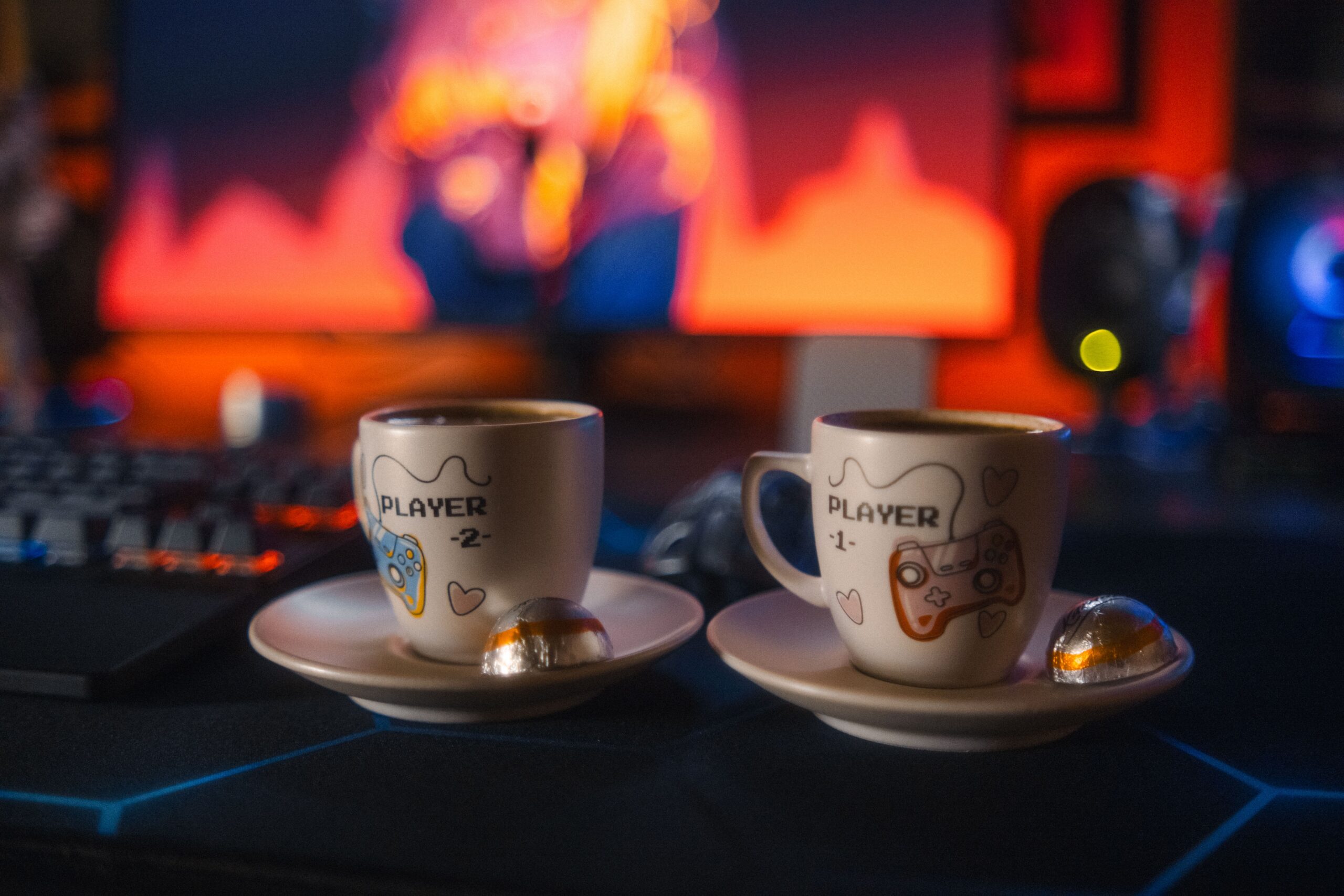
Both involve a screen.
They don’t make me feel the same afterward.
Slow living doesn’t necessarily mean less technology.
Sometimes it just means being more intentional.
Pay Attention to How Things Make You Feel
This is probably one of the easiest ways to start embracing slow living.
Pay attention to how you feel after doing something.
That’s it.
No journal required.
No spreadsheet.
Please do not make a spreadsheet unless they genuinely bring you joy.
When I spend time playing a relaxing game, I usually feel better afterward.
When I sit somewhere comfortable with a coffee and actually let myself enjoy it, I feel calmer.
When I listen to rain or a thunderstorm, my brain seems to quiet down a little.
But there are also things I do that leave me feeling completely drained.
Sometimes I’ll scroll through social media and realize I’m not even enjoying myself.
I’m just scrolling.
My thumb is apparently in charge now.
That’s usually a pretty good sign that I need to stop and do something else.
The slow living lifestyle encourages us to notice those differences.
What makes you feel rested?
What makes you feel cozy?
What makes you feel connected to your life?
And what leaves you wondering where the last hour went?
You don’t have to eliminate everything that drains you immediately.
Just noticing is a good place to start.
Stop Turning Every Hobby Into a Side Hustle
Okay.
I’m calling myself out with this one.
It is so easy to look at something you enjoy and immediately start thinking about how you could turn it into content.
Or a product.
Or a blog post.
Or some other project.
Sometimes I feel like my brain sees a hobby and just says, “This is nice. How can we make it stressful?”
Apparently, we’re very efficient around here.
The internet has made it incredibly easy to monetize our interests, which can be amazing.
But it can also make us feel like enjoying something isn’t enough.
If you bake, maybe you should sell baked goods.
If you craft, maybe you should open an online shop.
If you play games, maybe you should stream them.
If you read books, maybe you should review them.
Suddenly, everything has an audience.
Slow living can mean letting yourself have things that aren’t productive.
You are allowed to enjoy something badly.
You are allowed to have a hobby that doesn’t make money.
You are allowed to do something and never post about it online.
I’m still working on this one. Clearly. I’m writing a whole blog post about it.
The irony is not lost on me.
Create Small Moments Where You Aren’t Multitasking
My ADHD brain loves multitasking.
Or, more accurately, my ADHD brain loves attempting to do five things at once and then wondering why none of them are finished.
I’ll watch something while scrolling through or playing a game on my phone.
I’ll drink my coffee while working.
I’ll game while thinking about content ideas.
There is almost always something else happening.
Slow living can be as simple as choosing one thing and actually doing that thing.
Drink your coffee without opening an app.
Sit outside without trying to take the perfect picture.
Listen to the rain without putting on a video in the background.
Play a cozy game because you want to play it, not because you’re trying to create content from it.
You don’t have to do this all day.
I don’t think I could.
But five or ten minutes of doing one thing can feel surprisingly different when you’re used to constantly splitting your attention.
Let Some Things Take Time
We live in a world where almost everything is supposed to happen immediately.
Fast shipping.
Fast food.
Short videos.
Instant messages.
If something takes longer than expected, we start wondering what’s wrong.
What happened to the world where we didn’t have the answers in our pocket and when someone called while you were out, they just had to wait for you to get home to call them back?
However, I’m guilty of living in the now with instant access to everything.
I want to see results immediately.
If I start something new, part of my brain expects to be good at it right off the bat.
Totally reasonable expectations (not).
Slow living reminds us that some things take time.
Plants grow slowly.
Skills develop slowly.
Homes become cozy over time.
Lives change slowly.
You don’t need to completely reinvent your routine this weekend.
You don’t need to buy everything for your dream cottagecore home at once.
You don’t need to wake up tomorrow as the perfectly calm, intentional version of yourself.
You can start with one thing.
Then another.
Then maybe forget about it for three days and try again.
That’s still progress. It’s the intent that matters.
Every Slow Living Lifestyle Looks a Little Different
Your version of slow living might involve gardening or baking.
Mine currently involves coffee with an unreasonable amount of creamer and listening to thunderstorms.
Someone else might enjoy knitting, taking long walks, or reading before bed.
There isn’t one correct way to live slowly.
And I think that’s where the internet sometimes gets it wrong.
Slow living has become an aesthetic.
And don’t get me wrong, I love the aesthetic.
Give me warm lighting, plants, mushroom decor, fuzzy blankets, and a cozy little cottage that looks like it’s straight out of a fairy tale.
I’m there.
But you can buy every cottagecore item you use and still feel completely disconnected from your life.
The aesthetic can help create an environment that feels cozy.
But it’s the intention that makes it slow living.
You Don’t Have to Disappear Into the Woods
I still love the fantasy of disappearing into a little cottage surrounded by trees.
There would be tiny mushrooms everywhere.
A nice little stream that runs right past my garden.
Or I would listen to thunderstorms from inside while drinking coffee and watching the rain hit the windows.
I’d have a cozy reading corner where I would absolutely, definitely read all of the books I keep saying I want to read.
Probably.
But slow living doesn’t have to wait for that imaginary cottage.
It can happen now.
It can be five quiet minutes.
It can be putting your phone down because you realized you weren’t enjoying what you were doing.
It can be choosing a relaxing game instead of something that makes you want to throw the controller.
It can be as simple as lighting a candle just because you like the smell and want to watch the flame flicker.
You don’t have to give up your phone.
You don’t have to move to the countryside.
And you definitely don’t have to start making your own cheese.
Unless you want to. Then all the power to you.
Slow living is simply about making space to actually experience your life.
Even when that life is busy.
Even when it’s chaotic.
Even when you checked your phone halfway through reading this.
I won’t tell.

You May Also Like

The Ultimate Cottagecore Bucket List for Every Season (Spring, Summer, Autumn/Fall, and Winter)

Cottagecore vs Fairycore: What’s the Difference?